
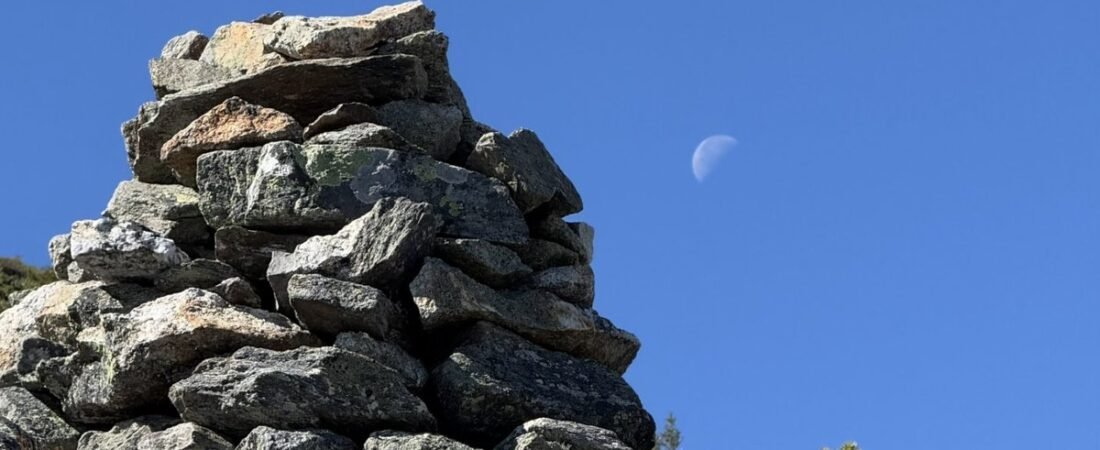
You can see cairns at the top of the home page and in the logo. They’re here for a reason. On the trail, cairns are the waypoints that guide hikers above treeline, and building them is my favorite part of a hobby I picked up in this next chapter: trail maintenance.
I got started after finishing hiking all 48 of New Hampshire’s 4000-foot peaks and wanted to find a way to give back to the forests and trail systems in the Northeast. I am also a member of the Appalachian Mountain Club, so I searched their website for volunteer opportunities and stumbled on the Adopt-A-Trail program. My girlfriend and I adopted a trail segment in 2022.
What Does a Trail Adopter Do?
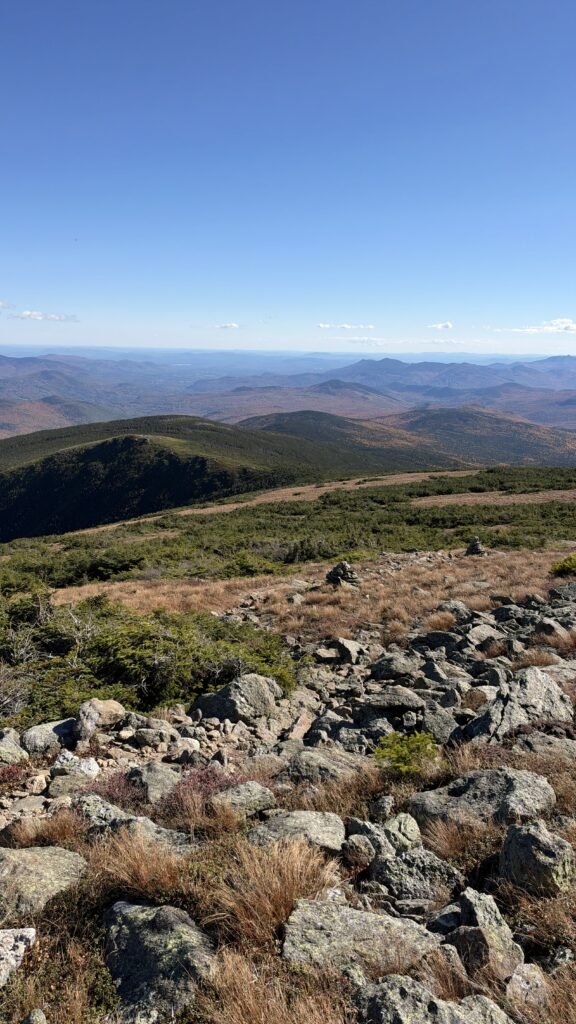
Picture doing yard work with a view at 4800 feet. As part of the program, we commit to working on our segment at least two times a year.
Why does a trail need work at all? Water and boots. Rain running down the trail washes the dirt away, and hikers stepping around a muddy spot or an overgrown bush widen the trail a little more each time. So most of the job comes down to two things: move the water off the trail, and keep the hikers on it. Do that well, and the trail is safer, too.
Our trail segment starts about 1.6 miles from the road at about 3700 feet. The other end is a trail junction about 1.6 miles farther and is at about 5200 feet. The photo shows the view of our trail from the high end.
About half of the trail is in the alpine zone. In that area, we build or repair cairns or scree walls that are designed to keep hikers on the trail and away from the delicate alpine vegetation. We also trim back some of the shorter bushes.
The rest of the trail is wooded and we focus on trimming branches and keeping hikers in the middle of the trail. One other job an adopter does is clearing or repairing water drainage features, but our trail is high up and follows a ridge so we don’t have much of that. Just one stubborn puddle.
What Is a Cairn?
Cairns are strategically placed piles of rock that help hikers find the trail in bad weather and snow cover. There is an art to building these so that they can stand up to the elements.
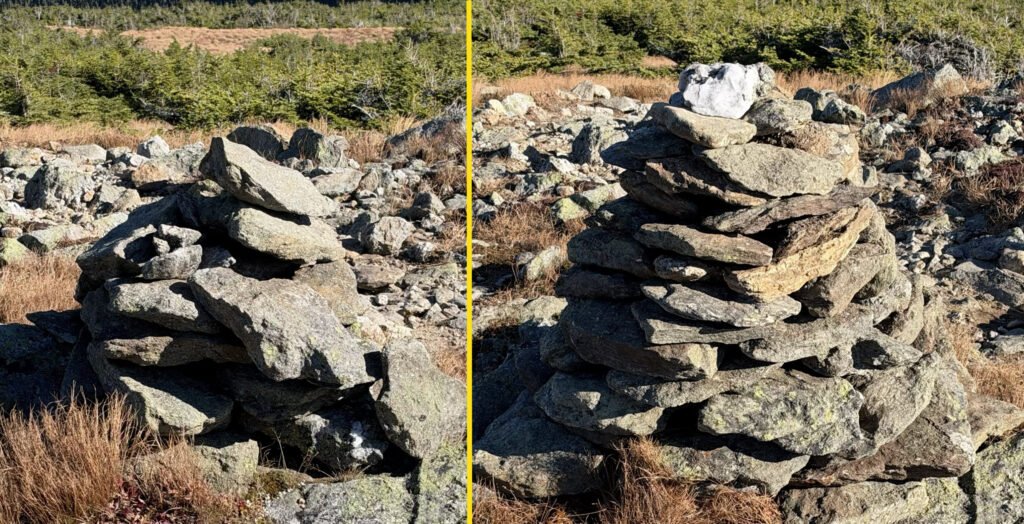
Here’s one we rebuilt. On the left is what we found: a slumped pile. On the right is what we left.
Most of the work was finding the right stones. We chose flat ones for the outside, which we had to collect without trampling the alpine plants around us. We started with a wide circle at the bottom and built up layer by layer, setting each stone so it bridges the gap between the two below it. We filled the middle with chunky leftover rock as we went, and the whole thing narrowed toward the top. It took us about an hour. The last stone was a white one, which helps the cairn stand out in fog or at night.
How to Get Started
Many outdoor organizations have programs for trail maintenance or adoption like the Appalachian Mountain Club and the U.S. Forest Service. Not in the Northeast? Ask a local hiking club, or search Volunteer.gov for trail work on public land near you. Before we started working on the trail, we attended training to learn about techniques and tools for protecting the trail. The AMC Trails program provides training and tools, and organizes special projects and learning activities. You don’t have to adopt a trail to take part, either.
How Long Can I Keep Stacking Rocks?
As I get older, I am trying to find things to do that give me purpose and that I enjoy. Hiking up into the mountains, working on trails, enjoying the views and the people who stop to talk, all give me that sense of joy. Will I be able to do it forever? I hope so.